
Last week on the train to Zurich, a woman diagonally across from me in the next compartment laughed loudly–uninhibitedly, freely. I catch myself staring at her. Not because she’s too loud. But because I’m jealous. Jealous of this lightheartedness that I don’t allow myself.
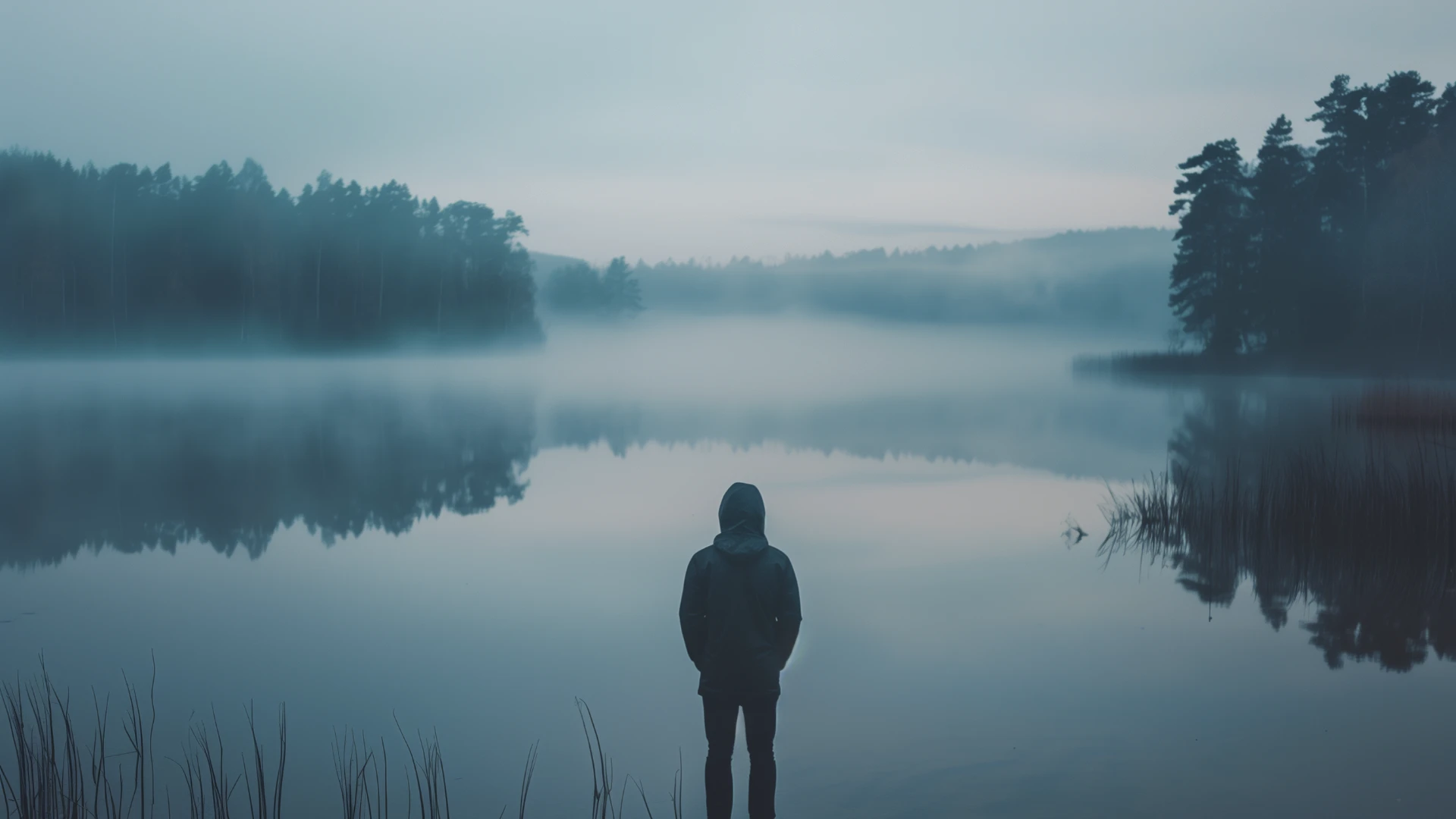
Moments like this happen all the time. We meet someone – on the street, at work, on stage-and suddenly we see more than just a stranger. We see a mirror. A glance, a sentence, a reaction—and something inside us becomes visible that we thought we had long since lost. Or never dared to have.
We don’t find it in the other person. We find it within ourselves.
These reflections happen quietly. A tone of voice, a gesture, an unexpected closeness—and suddenly something in us comes to light that we would rather keep hidden. These mirrors are not always pleasant. But they are real.
When glances look back
We all carry images of ourselves: how we want to appear, what we want others to see. But sometimes a single moment is enough to shatter that image. What fascinates us about others is often what we lack. What irritates us is what we don’t want to admit.
Tom experiences such mirrors constantly in Rock Dreams–on stage, in the rehearsal room, in conversations. He sees himself in others: in Elara, in Mike, in all the expectations placed on him.
Sometimes the music itself reflects him—raw, honest, unvarnished.
And every time he looks, he realizes how fragile the image he carries of himself has become.
Mirrors in art
Perhaps that is the true essence of all art: it holds up a mirror to us. Not to condemn, but to show what is there, light and shadow, control and longing. That’s exactly what writing Rock Dreams was about for me. About becoming visible.
About the question of what remains when the show is over and the music fades away. How much of what we show to the outside world is real—and how much of it is projection? This tension between closeness and distance contains the energy that art needs. And perhaps also the pain that it can never quite shake off.
Mirrors in everyday life
We encounter such mirrors outside of art as well. In friendships, in conversations, sometimes in a single moment. A person reacts to us–and we sense: there is something here that affects me. I have learned not to ignore such moments anymore. When something touches or disturbs me, I ask myself: what am I actually seeing here? Perhaps courage that I lack. Perhaps honesty that I shy away from. Or simply a truth that has not yet found a place within me.
Mirrors show everything—even what we don’t want to see. But that’s exactly what makes them valuable. Without shadows, there would be no profile, no depth. In Rock Dreams, Tom must learn that closeness is only real when it can withstand contradiction. That the people who challenge us are sometimes the ones who save us. And we see that most clearly when the light flickers.
Fragments
Perhaps we are all mirrors for each other. Fragments that recognize each other. People who discover in others the sides that they themselves lack.
Art—whether music, literature, or painting—is then nothing more than a space where these mirrors can meet. And sometimes a single glance, a sound, a word is enough to understand: we see the other—and in doing so, we find ourselves.
You can find out more about Tom’s journey between stage and truth in Rock Dreams.
What reflection did you last recognize in someone else? Write it in the comments.
Table of Contents
How useful was this post?
Click on a star to rate it!
Average rating / 5. Vote count:
No votes so far! Be the first to rate this post.