
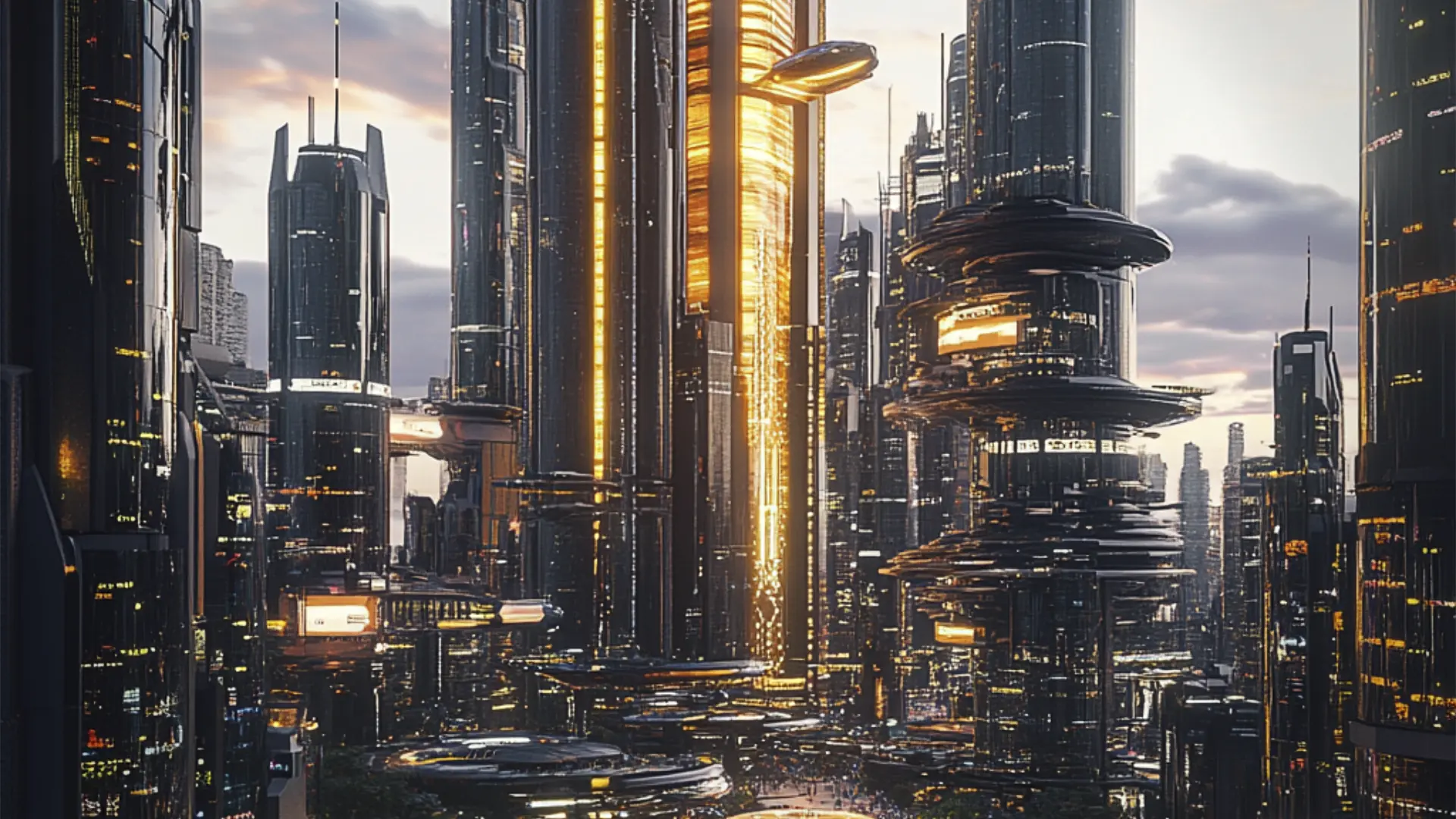
The world of Triarchia is a place of balance, strict order and deep social division. Three great spheres characterize this system, each with its own laws, values and duties. For centuries, they have existed in a fragile peace that is only maintained by adherence to the “Old Rules”. But the “Old Rules” enforce slavery, bondage and separation from nature and progress. And beneath the surface, conflicts simmer, and not everyone submits to their predetermined fate.
Why so gloomy?
I’m sure that everyone who has come into contact with the idea of Triarchia has asked themselves: Why so dark? As an author, I am fascinated by the possibility of creating a world that functions without compromise and yet is constantly threatened by internal tensions. The strict rules of Triarchia allow me to show characters in existential conflict – between obedience and rebellion, tradition and change. This clear structure not only gives me narrative freedom, but also allows me to deal intensively with the consequences of power, control and upheaval. The starting conditions are clear and uncompromising. It was not foreseeable that the real world would develop in this direction at the moment.
For me as an author, character studies are essential to lay the foundation of the story. I want to show who these people are before they are forced by external events to change. What values do they uphold? Where are their boundaries? And what happens when their previous life no longer exists? These questions drive my storytelling and make Triarchia an exciting experiment in character development for me. As a result, their values, conflicts and motivations become tangible even before they are challenged by the big event. And that brings us to the actual story, which begins sometime afterwards: a major, unforeseen event such as a war throws everyone off their usual course. All of a sudden, the old traditions no longer count, everyone is needed, everyone is equal. How does this change the relationship between the people? How do they behave? Are the traditions, the different laws and spheres abolished by law? Will they really be abolished?
That or something like that is the deeper idea for Triarchia – and the character studies are the groundwork for this.
The three spheres of Triarchia
The Green Fields –
The foundation of the world
The first sphere is the agricultural basis of Triarchia. Here, in the Green Fields, all the food for society is produced. But this is done under strict conditions: Machines are forbidden, and the hard work is done exclusively by slaves. These people live in isolation, unaware of the other spheres, while the land managers – also known as “farmers” – ensure that everything runs smoothly. Those who are born here remain trapped in a cycle of hard work and absolute control.
The borderlands –
Trading center and political intrigue
The borderlands are the economic heart of the world. Trade flourishes here, while powerful trading houses control the flow of goods. But with prosperity comes greed – intrigue, betrayal and competition are the order of the day. Those who manage to hold their own in this system can achieve great wealth, but falling out of favor with the powerful can happen just as quickly.
The Steel Cities –
High technology and absolute control
The third sphere is the center of science and technology. The Steel Cities not only control progress, but also the surveillance of society as a whole. Innovations are created here, but at the same time strict vigilance is exercised to ensure that no sphere oversteps its assigned role. Those who live here enjoy the privilege of knowledge – but even this privilege comes with a price: absolute loyalty to the system.
The Old Rules –
The Laws of Equilibrium
Peace between the spheres is ensured by the Council of Triarchia, a body made up of representatives from each sphere. The Old Rules stipulate that:
- The green fields are not allowed to use machines.
- The borderlands are not allowed to develop their own technology.
- The Steel Cities may not engage in slavery or violate the autonomy of the borderlands.
Anyone who breaks these rules risks not only severe penalties, but also the intervention of the Council’s military – a feared force that answers only to the Council.
The shadows behind the order
Despite these clear structures, unrest is growing in Triarchia. Some slaves begin to question whether their fate is really inevitable. In the Borderlands, powerful families are looking for ways to break the monopoly of the Steel Cities. And even in the strongholds of technology, there are those who question whether absolute control is really the only way.
Triarchia is a world full of destinies, power games and deep-rooted conflicts. The question is not whether something will change – but when. And who has the courage to set the first sign of change.
For me, Triarchia is more than just a dystopian world – it’s a laboratory for ideas about society, power and change. If you would like to explore with me how such a system develops and what happens when it begins to falter, then join me on this journey into the spheres of Triarchia.
Table of contents
How useful was this post?
Click on a star to rate it!
Average rating / 5. Vote count:
No votes so far! Be the first to rate this post.